
From Site Selection to European Scale: How TREASURE Advances Pit Thermal Energy Storage
Pit Thermal Energy Storage (PTES) is increasingly recognised as a key enabling technology for the decarbonisation of district heating systems. As Europe moves towards energy systems dominated by fluctuating renewable sources, large-scale thermal storage is essential to balance supply and demand and reduce reliance on fossil-based peak load technologies.
Two in-depth articles published on Solarthermalworld.org in November 2025 highlight complementary aspects of PTES deployment - from early project planning to long-term system integration. Together, they illustrate how the TREASURE helps accelerate PTES uptake across Europe.
Site selection and feasibility assessment for PTES
Reducing risk in early project phases
The first article focuses on site selection and feasibility assessment - among the most critical phases of any PTES project. While the technology itself is mature, inadequate site screening or feasibility analysis can lead to delays, redesigns, and increased costs.
Within TREASURE, these challenges are addressed through a series of expert workshops led by project partner PlanEnergi. Practitioners and researchers involved in real PTES projects share hands-on experience covering geotechnical conditions, environmental constraints, permitting procedures, and stakeholder engagement.
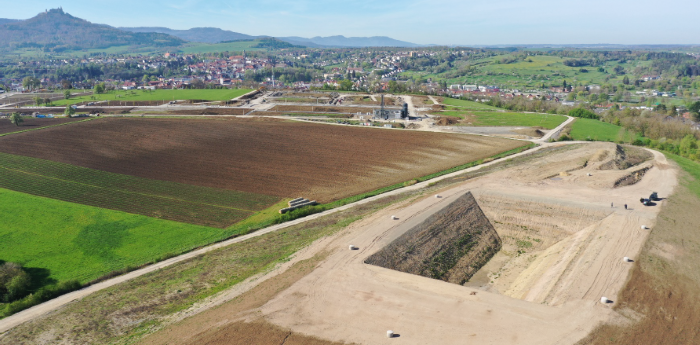
The resulting reports translate practical experience into clear methodologies that help utilities and municipalities reduce technical and financial risks. Case studies from Denmark, Germany, and Austria demonstrate how early assessment of land characteristics and subsurface conditions can significantly improve project robustness and public acceptance.
Accelerating PTES deployment across Europe
From demonstrations to system-level relevance
The second article takes a broader view, positioning PTES as a strategic infrastructure element for Europe’s future district heating systems. It highlights how PTES enables greater integration of renewable energy by storing surplus heat over short-, medium-, and seasonal-time scales.
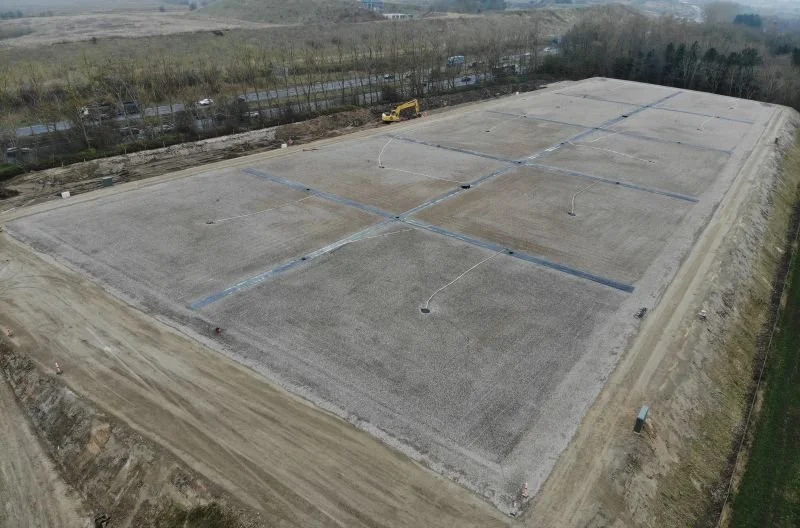
Operational data from installations such as Høje Taastrup in Denmark demonstrate high efficiency, stable high-temperature operation, and reduced heat losses through improved storage design. Unlike first-generation PTES systems, which focused mainly on seasonal solar heat storage, newer installations increasingly support flexible operation and peak-load reduction.
Beyond individual projects, the article presents projections indicating that thousands of PTES installations could be required by 2050 to store a meaningful share of Europe’s district heat demand - underlining the technology’s long-term strategic importance.
Together, the two articles reflect TREASURE’s integrated approach: combining experience-based guidance for early project phases with large-scale demonstrations and system-level analysis. This dual focus helps strengthen confidence in PTES as a scalable, efficient, and economically viable solution for Europe’s clean heating transition.
